Your astrophotography copilot
IC 2087
reflection nebula in Taurus
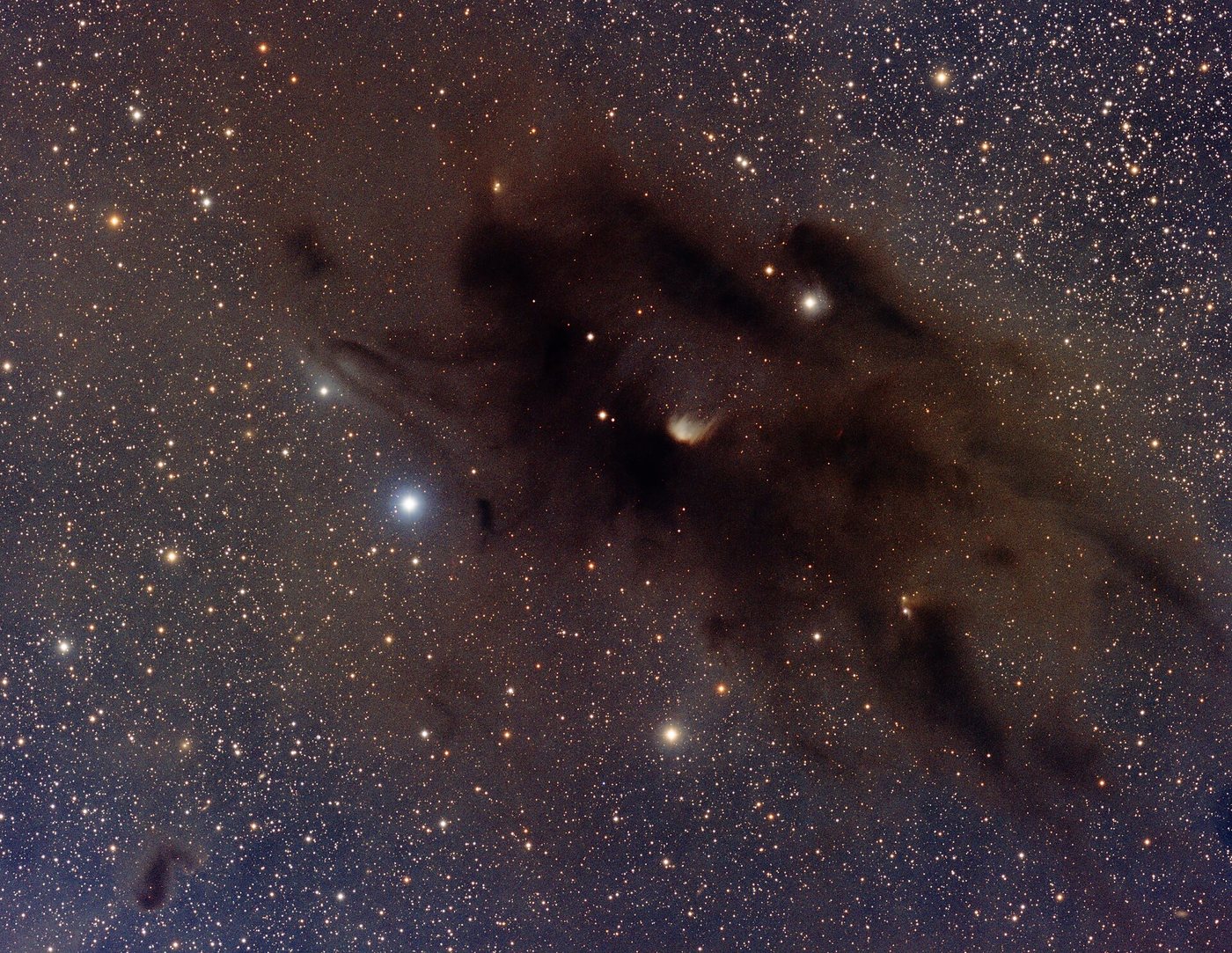
IC 2087 is a reflection nebula, a cloud of dust that shines by scattering the light of nearby stars, in the constellation Taurus. It measures about 4′ across. This page covers when to photograph it, what focal length and filter suit it, and how high it climbs from your latitude.
- Catalog
- IC 2087
- Type
- reflection nebula
- Constellation
- Taurus
- Size
- 4′ across
- Total light to aim for
- About 8 h (Faint dust needs long exposure and a dark sky.)
- Peak month (any location)
- Nov
- Typical prime months
- Sep to Feb
- Filter
- No filter (broadband); a UV/IR-cut or L filter is enough
Data from OpenNGC (CC-BY-SA 4.0). Size and brightness are approximate, and a galaxy’s magnitude is spread over its whole area, so a large faint one is harder than its number suggests.
Pick a saved location or share your device location. Your coordinates are used only to calculate tonight and are not stored. To save locations, use the planner.
The highest point IC 2087 reaches in the sky. Above about 60° is excellent, 30° to 60° is workable, and under 30° you are looking through a lot of air.
| Latitude | Highest point | Rating |
|---|---|---|
| 55°N (Scotland, Alaska) | 61° | High in the sky |
| 45°N (Minneapolis, Milan) | 71° | High in the sky |
| 35°N (Los Angeles, Tokyo) | 81° | High in the sky |
| 25°N (Miami, Cairo) | 89° | High in the sky |
| 35°S (Sydney, Santiago) | 29° | Stays low |
See it in your frame · Open the planner
When to photograph it
Sep to Feb is the main season, and it is highest in the middle of the night around Nov. Before that it rises in the evening or late night; after it, it sets earlier each week, until it is lost in the evening twilight.
Framing and focal length
At about 4′ across it is small, so it needs a long focal length. At 2,000 mm it fills roughly 10% of the long side of an APS-C frame, and a shorter lens would leave it as a small patch in the middle.
Filters, light and the Moon
No filter (broadband); a UV/IR-cut or L filter is enough. Plan on about 8 h of total exposure to start with. Faint dust needs long exposure and a dark sky. Broadband targets like this are at their best in the dark of the Moon. Plan to image it in the week around new moon.
How hard is it?
IC 2087 is a challenge. It is small or faint, so it needs accurate tracking, a long focal length or a lot of exposure, and good seeing helps.
How high it climbs
The highest it ever climbs is 61° from 55°N, 71° from 45°N, 81° from 35°N, 89° from 25°N, 29° from 35°S. It stays low from 35°S, so expect more haze and glow. It does best from 25°N.
When is the best time to photograph IC 2087?
Sep to Feb is the main season, and it is highest in the middle of the night around Nov. Before that it rises in the evening or late night; after it, it sets earlier each week, until it is lost in the evening twilight.
What focal length do I need for IC 2087?
At about 4′ across it is small, so it needs a long focal length. At 2,000 mm it fills roughly 10% of the long side of an APS-C frame, and a shorter lens would leave it as a small patch in the middle.
What filter should I use for IC 2087?
No filter (broadband); a UV/IR-cut or L filter is enough.
How long should I expose IC 2087?
Aim for about 8 h in total as a starting point. Faint dust needs long exposure and a dark sky.