Go / no go for deep skyGo / no go for deep sky imaging
M2
globular cluster in Aquarius
M2 is one of the larger and richer globular clusters, a ball of well over a hundred thousand stars in Aquarius. It is slightly oval and has a dense, bright core that blends into a wide halo of fainter stars. It is a good first globular to learn on because it is easy to find and bright enough for short subs.
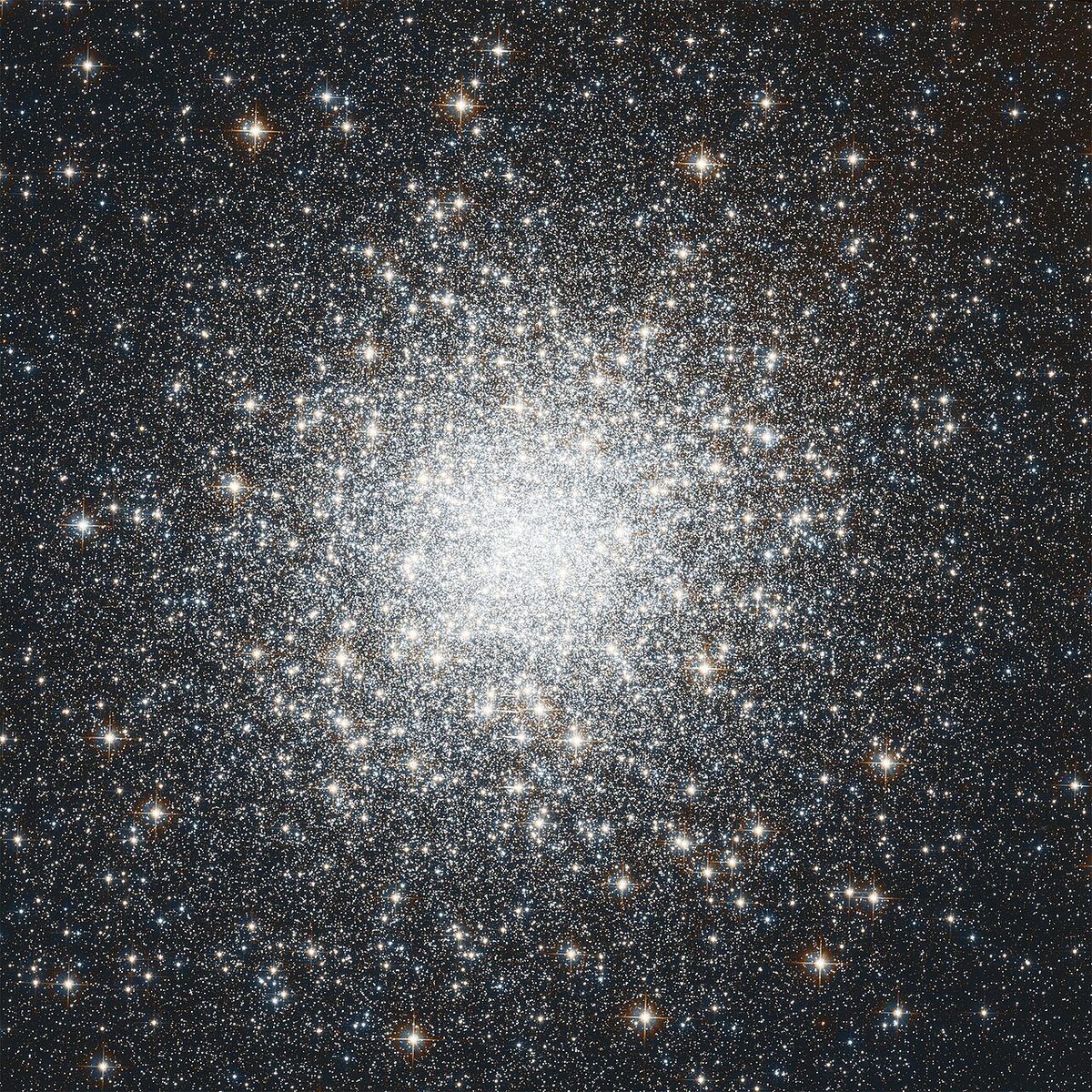
Save your telescope or lens on the planner to lay your camera frame over this diagram.
// Key facts
- Catalog
- M2
- Type
- globular cluster
- Constellation
- Aquarius
- Size
- 16′ across
- Brightness
- Magnitude 6.5
- Distance
- about 37,500 light-years
- Peak month (any location)
- Aug
- Typical prime months
- May to Oct
- Difficulty
- Beginner
- Filter
- No filter (broadband)
Pick a saved location or share your device location. Your coordinates are used only to calculate tonight and are not stored. To save locations, use the planner.
How to image M2
- At 16 arcminutes it fills a modest part of the frame at 600 to 1,000 mm, which shows the outer halo of stars clearly.
- The core clips easily. Keep sub-exposures short, or add a few extra short frames to blend in so the center stays resolved.
- Aquarius is best placed in the autumn evening sky, and the cluster stands well clear of most of the Milky Way's haze.
Framing: what focal length?
M2 is small, so a "60% of the frame" focal length would be impractical. Here is how much of an APS-C frame it covers at common long focal lengths; expect to crop.
| Focal length | Share of the frame width |
|---|---|
| 1,000 mm | about 20% |
| 2,000 mm | about 40% |
| 3,000 mm | about 59% |
How high does it climb from your latitude?
The highest point M2 reaches in the sky. Above about 60° is excellent, 30° to 60° is workable, and under 30° you are looking through a lot of air.
| Latitude | Highest point | Rating |
|---|---|---|
| 55°N (Scotland, Alaska) | 34° | Workable |
| 45°N (Minneapolis, Milan) | 44° | Workable |
| 35°N (Los Angeles, Tokyo) | 54° | Workable |
| 25°N (Miami, Cairo) | 64° | High in the sky |
| 35°S (Sydney, Santiago) | 56° | Workable |
Also worth imaging
Want a GO / NO-GO verdict for tonight, with clouds, moon, seeing and a full dark-window timeline?
Open the planner